
Share
Between Colmar’s most famous landmarks lies a territory uncharted by maps. An almost empty space, barely whispered about, nestled in the city’s interstices. It has no official name. It isn’t marked by a tourist route, a guidebook, or a sign. And yet, it is here that a discreet heart beats—that of an inner, contemplative, essential Colmar.
It’s not quite Little Venice yet, though its canals are close by. It’s no longer entirely the old town center, even if the cobblestones still echo underfoot. This “in-between city” is best discovered on foot, at dawn or in the late afternoon, when the crowds thin and the sounds soften.
It perhaps begins on Rue des Tanneurs, where the tall, narrow houses with their stark facades seem to close off the sky. He then glides towards the Quai de la Poissonnerie, but without lingering. He prefers the discreet banks of the Lauch, downstream, where willows brush the water’s surface and boats seem to linger.
Further on, heading back up towards Rue Saint-Jean or Rue Berthe Molly, half-open gates sometimes offer glimpses of private gardens. Silent courtyards, ancient foliage, wild wisteria, sculpted stones whose origins are now lost to time. This Colmar is made of traces. Of echoes. Of soft shadows. Here, you hear the wind before the city. You sense a broader, less urban, almost woodland breath.
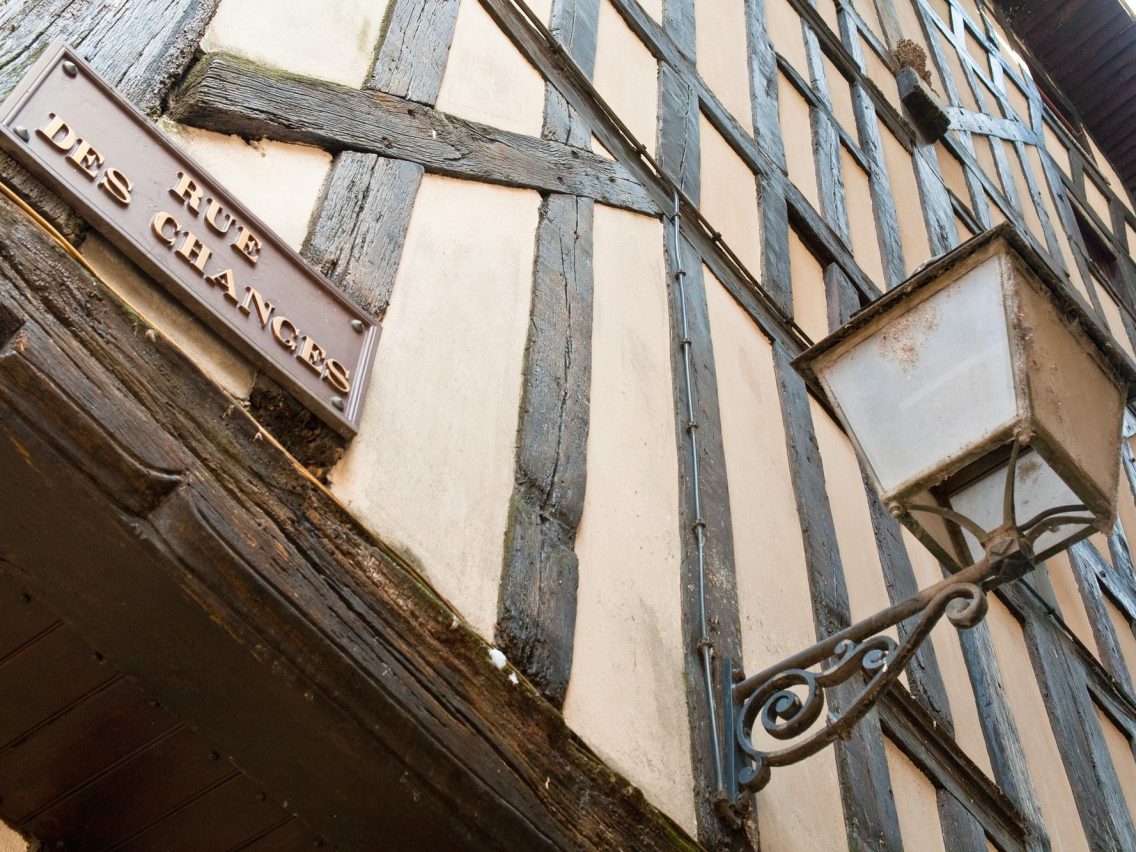
Here, one naturally slows down. One sees things differently. An ornate door knocker, a forgotten lintel, light filtering through a slanted skylight. Even the signs are silent: they sell nothing, they barely announce their presence.
At 34 rue des Marchands, the medieval house Zum Grienen Hüs stands discreetly, as if frozen in time. It faces the Bartholdi Museum, but passersby barely notice it. It’s the kind of place you pass through without entering, yet it lingers in your memory, like a faint signal.
These are the places that best tell the story of Colmar. Not in their grandeur, but in their restraint. In what they preserve, in what they don’t immediately reveal.
It is in this slow rhythm, between the stones and the water, that a house in the making gently takes root. A place designed to embrace this pace, this relationship with time, this inhabited silence.
Villa COSE. Its name is already circulating, even though nothing is yet visible. It doesn’t impose itself; it settles in, gradually, in this hushed, almost subterranean Colmar. As if it had always been there.
This magazine will not reveal its outlines too quickly. It will simply follow its vibrations – those of a place that embraces secrecy in order to better transform it into a promise.

