Share
Here’s the translation:
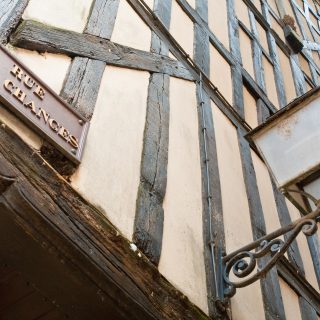
Colmar cannot be reduced to the chatty facades of its half-timbered houses or the lively shopfronts of its pedestrian streets. It can also be heard in the rustle of leaves, in the long shadows cast by trees, in the pathways that time has worn smooth.
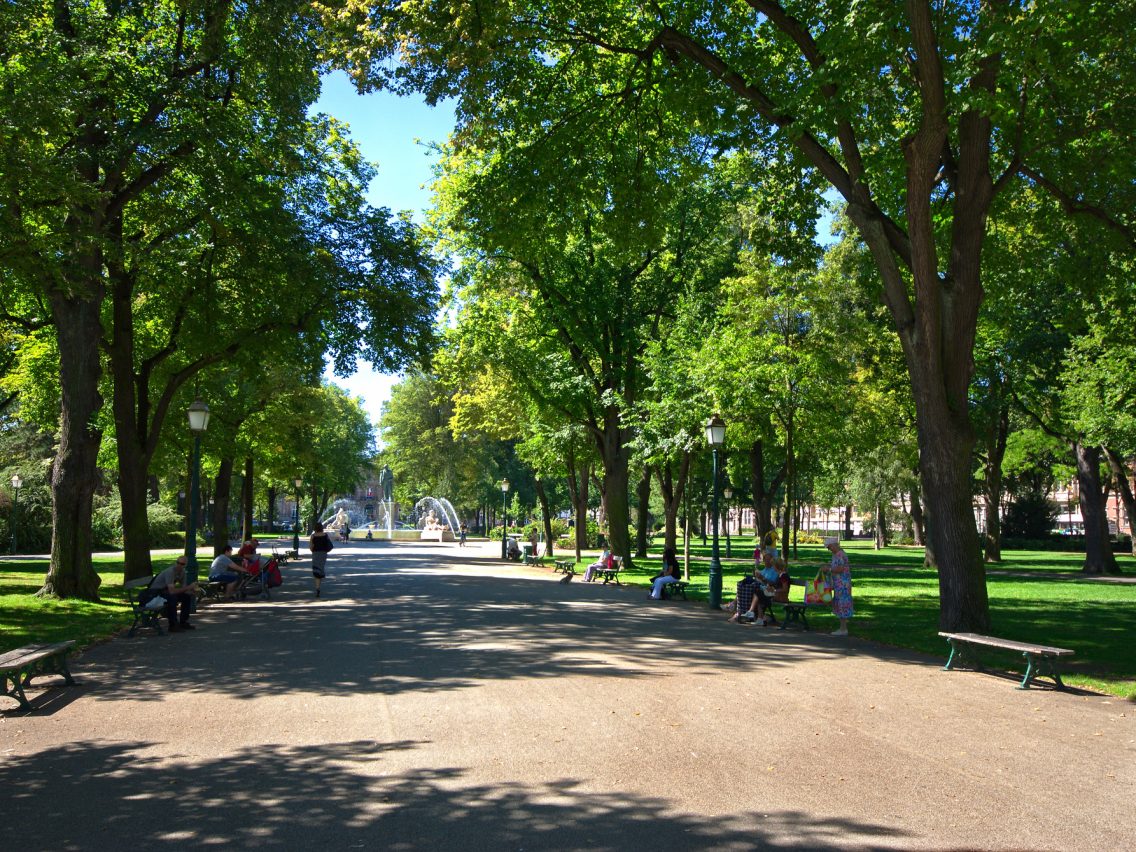
Take the Parc du Champ-de-Mars, a great green breath at the heart of the city. First planted under the Empire in 1808, it is now lined with 193 linden trees, offering the city a haven of quiet coolness. Walking beneath them feels like passing under a vault, wrapped in a gentleness found nowhere else.
A little more discreet, the Parc du Château d’Eau is a capsule of calm, planted at the end of the 19th century. Here, one encounters rare species: Atlas cedar, metasequoia, giant sequoia, bald cypress — so many trees bearing memory and mystery in the midst of the city of Colmar.
Further still, along the narrow streets, hidden green refuges appear: shaded gardens, overhanging branches, foliage barely glimpsed. These living places, invisible to hurried eyes, form a small kingdom apart, where only the curious slow down.
And then there is the Judas tree, in the Waldner-Stephan courtyard, estimated to be around 250 years old. It seems to have been there long before any city, faithful and silent, blooming each spring in a quiet burst of pink.
Here, the green is not mere scenery: it is a deep breath.
It demands that we stop, listen, and feel. It has watched time pass, asking for nothing, simply growing, simply being.
It is within this green tapestry that La Villa COSE will come to life. Its essence, its lines, its spirit will be woven into these layers of vegetation. It will not seek to dominate, but to be — in harmony with the living world, attuned to the place, in resonance with this discreet and authentic nature.
In this city where the trees speak softly, La Villa COSE is destined for a gentle arrival, a presence that is felt rather than imposed.
It will be like these leaves: patient, discreet, rooted.